Showing posts with label BIF. Show all posts

Sunday, December 13, 2020

Olympus MC-20 2x teleconverter - wildlife review

I love wildlife photography and my favourite lens is Olympus 300mm F/4.0. 

When Olympus announced the MC-20 teleconverter I was excited about the idea of having a 600mm combo. So I got the teleconvertor and used it in my photo sessions for more than one year. The teleconverter gave me more flexibility, I could address prudent animals and cover longer distances which I did not imagined before.
In this article I will post impressions and tips from my user experience and a lot of pictures.

Olympus MC-20 sample


1. Focus speed and birds in flight

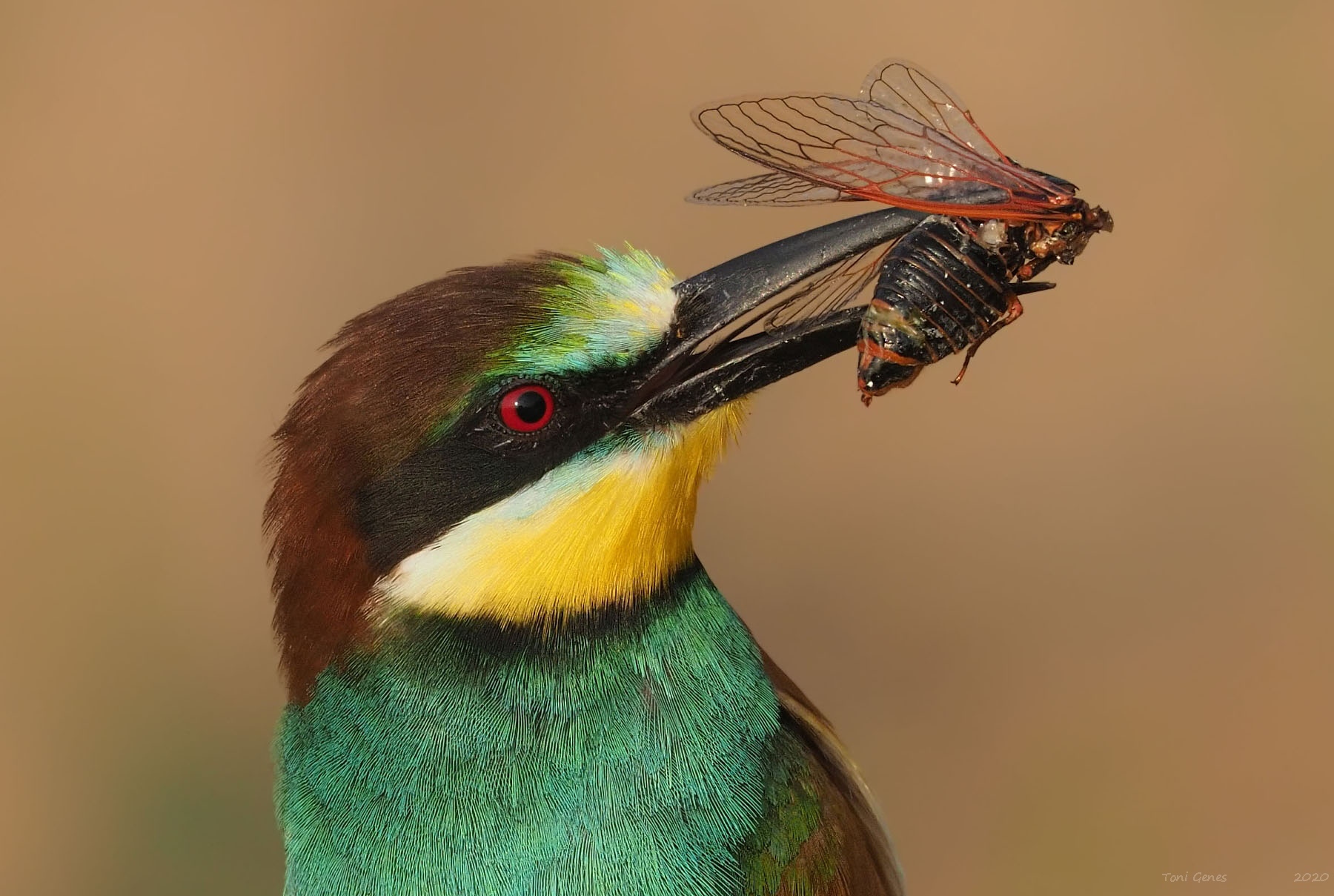
MC-20 affects the focus speed. Although the difference is visible, the speed is still fast enough for slow birds in flight like herons or buzzards or for birds which are far away. I tried the combo for fast birds like swallows or bee-eaters, but I would not recomand it. In such case the lens alone is a much better option.

The focus speed improves when a smaller number of focus points it is active. The best setting I found for the focus speed and accuracy is the group of 5 focus points. 

I don't consider 300mm+MC-20 a perfect combo for birds in flight because:

1. the teleconvertor cuts 2 stops of light, so ISO needs to be increased which has impact to the IQ;

2. the focus accuracy is not good in low light, especially in C-AF mode;

3. the focus speed drops in lowlight, sometimes camera is hunting in C-AF mode. 

4. it is hard to keep the bird in the frame of such long combo (1200mm FF equiv.). When the birds comes to close, it does not fit into the frame.  It happenned often to me. 

5. in low light S-AF mode is better than C-AF : faster, more accurate. 

For static subjects, when there is good light, the teleconvertor shines : the system focuses relatively fast and the accuracy is OK. The ISO can stay at a medium value where the details are better preserved. 

I use sometimes MC-20 for birds of prey because the photo-shooting distances are long. When the light is good light, the results are nice.

MC-20 sample


Olympus MC-20 sample


2. Image quality

In the past I used all the teleconverters built by Olympus: EC-14, EC-20, MC-14 and MC-20.
In my opinion MC-20 is the best teleconvertor which Olympus ever built:

-no chromatic aberations;

-although the TC has a small impact on the image quality,  the image quality is still good, the details are well preserved.

I recomand using the teleconverter in good light only. In low light the image quality will be heavily affected by high ISO and low focus precision. 

Olympus MC-20 sample


Crop from previous image:


Crop from previous image:

3. Background

The teleconverter doubles the focal lenght, so ussually the background is very nice blured. In fact it's easy to get a blured background when MC-20 is mounted on the lens.


 Shooting against light can provide interesting backgrounds like the one bellow:

Olympus MC-20 sample

There are special conditions when the background looks bad. By example when the ground and the air are hot.

Bellow I posted a negative example - the ground and the air were very hot, so the background came out harsh. In my bellow example not only the background was affected by the heat, but also the sharpness of the subject was affected.
I found that the hot ground can affect the focus accuracy too. 


4. Keeping the subject in the frame

600mm (1200mm echiv) is a very long focal length. 

Before getting this teleconverter, I was worried that it would be dificult to find the subject by viewfinder or to keep it in the frame. 

In general it was better than I expected. I can get the subject in the frame relatively quickly. With birds in flight is more dificult, but stil possible.

Accidentally it happened to spend long time to find a subject through the viewfinder or to fail completely to capture birds in flight. It also happened that the subject came to close and did not fit into the frame. 

This harrier came too close. So at the end I could produce only a "portrait in flight":


5. Image stabilization (IS)

The Olympus Image Stabilization it prooved to be a very efficient stabilization. 

MC-20 + 300mm is a very long combo (1200mm FF echiv.) and the efficiency of IS will decrease by minimum 1 stop compared to the 300mm lens alone. This is stil a very good performance.

It is crucial to keep the hands steady, to keep the shaking in the range of what the IS can cover. When the hands are steady, the IS system can handle sharp pictures at 1/20s...1/50s.

Bellow I posted a picture taken at 1/13s, ISO-200 and F/8.0 :

The IS will also stabilize the image in the EVF. I tried to track birds in flight without IS. The image in the EVF was shaking too much. I can do it with with 300mm, but 600mm is too long. So the IS will  stabilize the image in the EVF and makes 600mm usable for tracking birds.


6. Tips and sugestions

a) Do not keep the teleconvertor mounted all the time ! Use it only when there is good light ! In low light the high ISO and low focus accuracy will heavily affect the image quality. If you use it in low light, use S-AF mode because it will focus faster and accuracy will be better.

b) Avoid using the TC when is hot outside. From my experience, the background is affected, the focus accuracy is also affected. In the hot summer days I use it only early morning. When is 09:30 and the temperature goes over 21'C, I remove it from the lens. 

c) MC-20 is not an ideal tool for birds in flight:

        -ISO must be increased by 2 stops;

        - the focus speed is ok but not fast enough for some species of birds (swallows, bee-eaters..);

        -sometimes the bird is too close and does not fit into the frame or is dificult to keep it in the frame. 

For BIF I prefere to use the lens alone - it's faster and more versatile. 

d) use the IS as much as possible, not only to stabilize the lens but also to stabilize the image in the EVF.


MC-20 sample


7. Conclusions:

a) MC-20 is the best teleconverter which Olympus ever made : good image quality, nice blured background, relatively fast focus.

MC-20 sample


b) It is a must-have tool for wildlife photographers because it provides a very long reach - 600mm (1200mm FF echiv.). With such long combo I was able to address far subjects. Before having MC-20 I would not even try to address so far away subjects.


c) In good light it performs good, it brings a big plus. It preservers well the details while offering a very comfortable reach.

d) In low light focus accuracy drops. Sometimes camera will hunt the focus. The loss of two stops will impact the ISO and then IQ.


Final words:

With the compromise of loosing two stops and slowing the focus speed a bit , MC-20 can stil make a difference in some situations. It improved my wildlife photography, it allowed me to address prudent animals which tolerate me only at far distances.

For wildlife photographers using Olympus gear, MC-20 is a nice adition. I recomand it.


Tuesday, March 31, 2020

Wildlife in Eilat - Israel

The south of Israel is known as one of the best birding places during migration when milions of birds cross the country.

This year I was there for one week in the first part of march. Most of the time was strong wind and probably this had an negative  impact on migration. But I had enough opportunities to make nice photos.
I had with me Olympus E-M1 MK II + 300mm F/4.0.

One of the best moments in my trip was the second day when I saw hudreds of  steppe eagles (Aquila nipalensis) in migration.


It was morning, some of the eagles were still resting on the sand in the desert.


The distances were in general big (60..100..150m). Olympus 300mm F/4.0 provided very good details and allowed me to post here 100% crops or nearly 100%.


20 km away from Eilet is the Red Canyon, a place with nice geological forms caused by erosion. It's an arid area with just a litle vegetation.
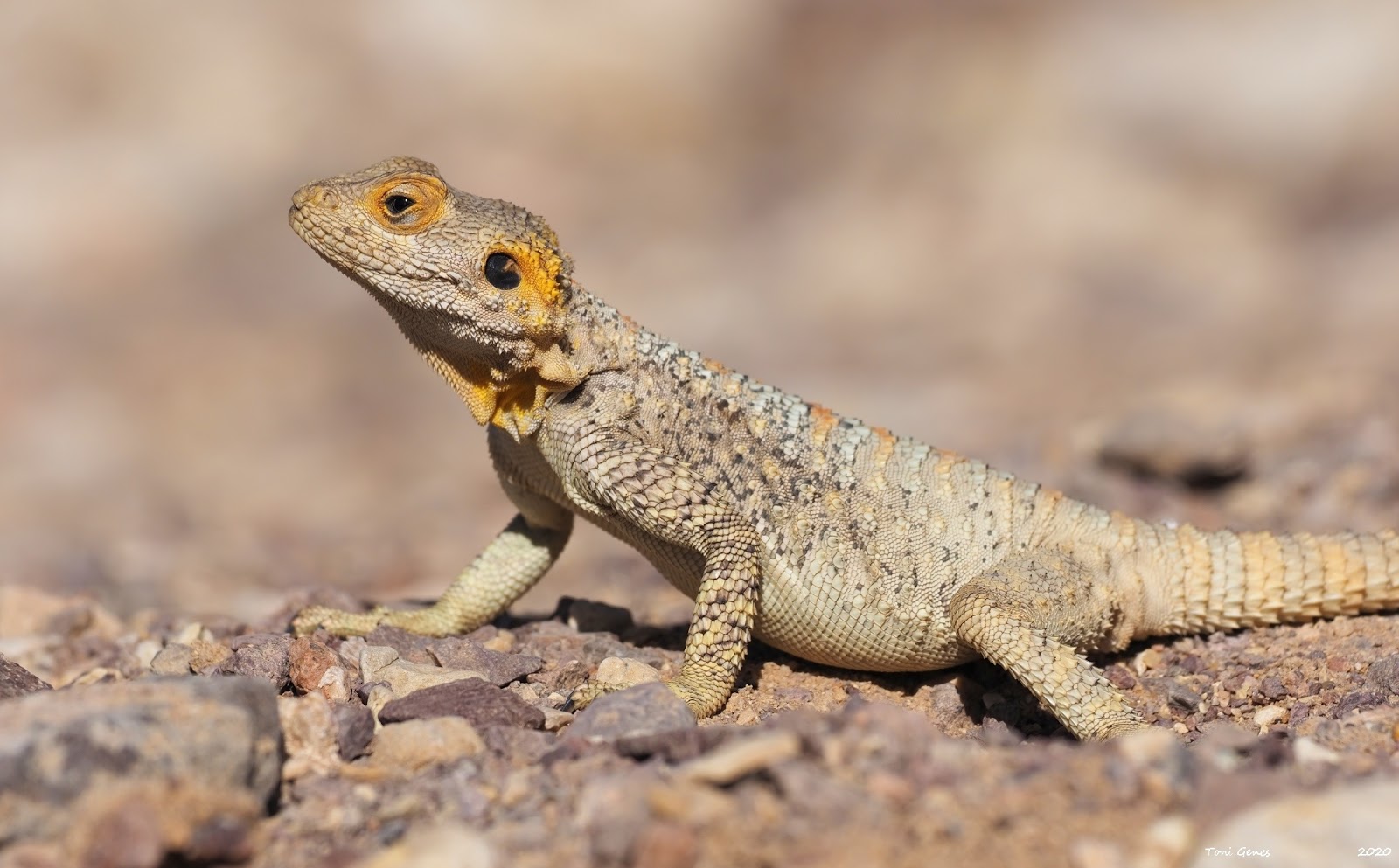
I found there a few rock hyrax, a roughtail rock agama, a blackstart, desert larks and white-crowned wheatears.


In the city Eilat there is an ornithological park with salty and fresh water lakes, alleys to walk and even wooden hides from where to observe the birds. This is a good place for birding or wildlife photography.


A few pictures I made in this park:


Every where in Israel there is a chance to find interesting species of animals.
This is an egyptian vulture I found 30km north Eilat. Maybe this bird is relatively common in Israel, but in my country is a very rare bird.


30 km away from Eilat it is Yotvata Hai-Bar Nature Reserve - a place which is the home for some rare desert animals.


I enjoyed my trip in Israel, this is for sure a good place for wildlife.


Saturday, November 30, 2019

Olympus 300mm F/4.0 autofocus performance from wildlife user perspective

I am using Olympus 300mm F/4.0 on E-M1 MK II for more than one year. During this year I had the opportunity to test the autofocus system in different conditions, I tried different settings and found how to maximize the keeper rate. In this article I want to post the best settings I found from my user experience and a lot of pictures with birds in flight.


When I had the first BIF session with E-M1 MK II and 300mm, I got a very low keeper rate - arround 25%. A lot of shots were out of focus.
Then I took shots with static subjects and even in this situation I had some out of focus photos. This was very strange and unacceptable, I thought somethings is really wrong with Olympus C-AF system.


But I did not gave up and I started to check all the settings related to the AF System. Hapilly I found were was the problem. There is a setting - "AF Scanner" which defines how many times the camera will retry to get the subject in focus. By testing the different settings, I found that Mode 3 is the only setting which gives good results. Mode 1 and Mode 2 will limitate the ability of the camera to keep the subject in focus and randomly the focus will fail.
From the moment I set-up Mode 3 on my camera, my keeper rate increased to 60...90% depending of the subject, light...etc.


Here is the list of settings which gave me the best results. Please consider it in this order (most important settings are on the top):

1. AF Scanner to be set-up on Mode 3. The other two modes (Mode 1 and Mode 2) will limitate the ability of the camera to keep the subject in focus not only when the subject is moving, but also when the subject is static.


2. AF Area pointer to be set-up on ON2. This is called also Cluster AF tracking.  It displays the AF target frame in green while the shutter button is pressed halfway. So with the shutter button half pressed you can keep the subject in the frame and see where camera focuses. So you can decide what is to best moment to fire.

3. Try to use less active focus points if is possible. This will increase the focusing speed while it will become more dificult to keep the subject in focus. By example a group of 25 focus points will provide a decent frame coverage and will be good enough for slow birds in flight like herons or buzzards.

4. Focus limiter will also increase the focus speed if the focus range is limited to a lower range. If I set-up my 300mm to focus from 4m to infinite, the focus speed is faster. Focus limiter in the camera will not only help camera to avoid being distracted by the background, but it will also help to see better the subject in the EVF especially when the subject is out of focus. I ussually set-up a range of 4m..75m or 4m..100m.

5. IS disabled. With IS disabled I get slight better results when I shoot birds in flight. I disable it in such situations or use it on AUTO mode.

6. C-AF Sensitivity to be set-up on -2. I got a bit better results with -2 compared to +2.

7. Use C-AF without tracking. The tracking option from E-M1 MK II works OK with slow birds in flight (herons, eagles) but it is not usable for fast birds like swallows or bee-eaters.

8. Firmware 3.0 brought a new option into E-M1 MK II menus - C-AF Center Priority. It sounds good but I did not got positive results at the first tests so I disable it. If I have the chance in the future, I will test it again.
In general, after firmware 3.0 I did not saw any significant improvment for the keeper rate. I get similar results as before.

9. C-AF - Release Priority C - I disabled this option (I set it to OFF). When is enabled, camera could shot even if the AF system did not confirmed the focus. I do not want to get OOF pictures. I prefere a lower frame rate with all pictures in focus.

10. Set EVF refresh rate to high. This will not improve the focus, but will help you to keep the subject in the frame. 

11. Fire short burts and release in between. Releasing the button will increase the ability of the camera to refocus on the subject.


One of the most dificult situations is when there is a distractive background.
Olympus C-AF system does relatively well in such situations, but of course experience&skills makes a big difference here.

In such situation I used 2 strategies:
1. I use a small group of active focus points (ex : 9) and keep this area on the subject. This works fine for slow birds but is very dificult to handle the fast birds like bee-eaters or swallows.
2. I use all focus points activated, then try to keep the bird in the frame and to lock the focus on the target by pressing the shutter button halfway. The keeper rate is lower than in the first case, but it is easier to keep the fast birds in the frame.

At the end, after some practice, I found Olympus system good and I got nice results.


My favourite birds in flight are swifts and swallows because those birds are very fast , dificult to keep in the frame, dificult to keep it in focus. So here it is important to activate all focus points and to have the highest refresh rate for the EVF. To get some focus speed here, I switch the focus limiter from 4m to infinite.
Olympus AF system managed very well.


For fast birds I use:
-exposure time = 1/4000s;
-all focus points activated;
-camera in Manual Mode and ISO=AUTO;
-IS=Off;
-C-AF (no tracking), low fps mode 6...10 fps;
-EVF refresh rate = high.
-F/4.0...F/5.6.

I use the electronic shutter in order to save mechanical shutter's life. Maybe mechanical shutter is slight better, but I could not find any issue with the electronic shutter. So I am using it.


In the past I used for many years Olympus E-5 + 50-200mm SWD + TC.
It was a good combo, I got very nice results with it, was a pleasure to use it.
But 200mm was not long enough in some situations. When I mounted the TC in front, the focus speed was affected, the image quality was affected too.

Now E-M1 MK II + 300mm F/4.0 it's a big step ahead, a perfect combo compared to what I used before:-better C-AF, faster AF, more fps;
-300mm F/4.0 has splendid IQ, I can shoot birds which are 100..200 meters away, then I crop and the picture looks still nice.
-crazy IS;

In my opinion Olympus has a now a very good combo for wildlife, without any things to complain.
I am very happy with it and looking forward in the future to make nice pictures.